Home / Tracking & Trailing
Tracking & Trailing

Following one person, across whatever is in the way.

A two-phase program that teaches a dog to identify and follow a particular person's odor — through vegetation, onto hard surface, around water, and past everything else that smells like a human being.

Working a track in open country
In short

LSOC's tracking and trailing program teaches a dog to identify and follow one particular person's odor across changing surfaces, terrain and conditions. It runs in two phases of roughly two months each, one session a week, and a team must pass the basic performance test before entering advanced work.

What the program is

One person's odor, not just a path on the ground.

The program teaches a dog to identify and follow the odor of a particular person across different surfaces, terrain and environments. It deliberately combines tracking, trailing and air scenting, so the dog can use whatever odor is actually available to find the person rather than only the kind it was drilled on.

That combination is the point. A dog taught to work only ground disturbance comes apart when the track crosses asphalt. A dog taught to work only airborne odor misses what is under its nose in heavy cover. Real searches do not announce which problem they are, and the person you are looking for is not cooperating with your training methodology.

It is also the same argument the rest of the method rests on. The dog has to solve the problem, and the handler has to be able to read which problem the dog has decided it is solving. Behavior is the evidence on a track exactly as it is on a vehicle.

Phase one

Basic tracking and trailing.

Two months, one session a week. Early work follows a specific person's odor across vegetated and grassy ground while the team builds the fundamentals — the surfaces that are most forgiving, so the handler can learn to see before the conditions start hiding things.

Most of what a handler is actually learning in that period is observation. By the end of basic you should be able to recognise:

Tracks get longer and harder as the team develops. They start including people who did not want to be followed — someone who left the ground, or took deliberate steps to break the track. Dogs learn to investigate trees and elevated areas for evidence a person climbed, because a track that stops is information, not a failure.

Basic ends with a performance test, and it is a gate. A team must complete the program and successfully challenge that test before entering advanced work.
Phase two

Advanced tracking and trailing.

Another two months, again one session a week, and this is where the conditions stop being forgiving:

The scent-article work is worth dwelling on, because it is the clearest demonstration of what the dog is actually doing. A dog that can be handed one person's odor and then pick that person's article out of a line-up is not following footprints. It is discriminating between human beings by smell, and once you have watched a dog do that reliably you stop arguing about whether the nose is real.

The part most programs skip

Handling the odor, and the record.

Human odor is evidence, and it is handled like evidence. Handlers are taught accepted practice for collecting, handling and storing human-odor training material — because a scent article that has been contaminated by three other people is not a training aid, it is a way to teach your dog something you did not intend.

Teams are also taught to keep training and deployment records that document the team's reliability against applicable evidentiary standards, and the program includes an introduction to the legal considerations that come with using a dog to follow human odor. Tracking evidence gets challenged. A team whose records exist and make sense is in a very different position from one whose handler is reconstructing dates from memory on the stand.

That is the same discipline the evaluation standard applies everywhere else, pointed at a different problem.

How it runs

Group of three, or one on one.

Group classes are capped at three dog-and-handler teams. Teams take turns working tracks and exercises, which means two thirds of your day is spent watching somebody else's dog solve a problem — and that is deliberate. You learn more about reading behavior watching a dog you are not handling than you do at the end of your own line, where you are busy.

Private instruction covers the same ground one on one for handlers who need it or whose schedule will not take a group. Sessions can be recorded either way, so the team's performance can be reviewed and argued over afterwards rather than remembered selectively.

Be honest with yourself about the physical side

Tracking is strenuous. It means prolonged walking over uneven terrain in heat, cold, rain and whatever else the day produces, and a real search does not stop because the handler is tired. Participants should be fit enough for long and physically demanding work. Anyone with a health condition that could make sustained outdoor exertion unsafe should talk to their doctor before enrolling. We would rather say that plainly now than find out on a hillside.

Watch

Tracking, worked.

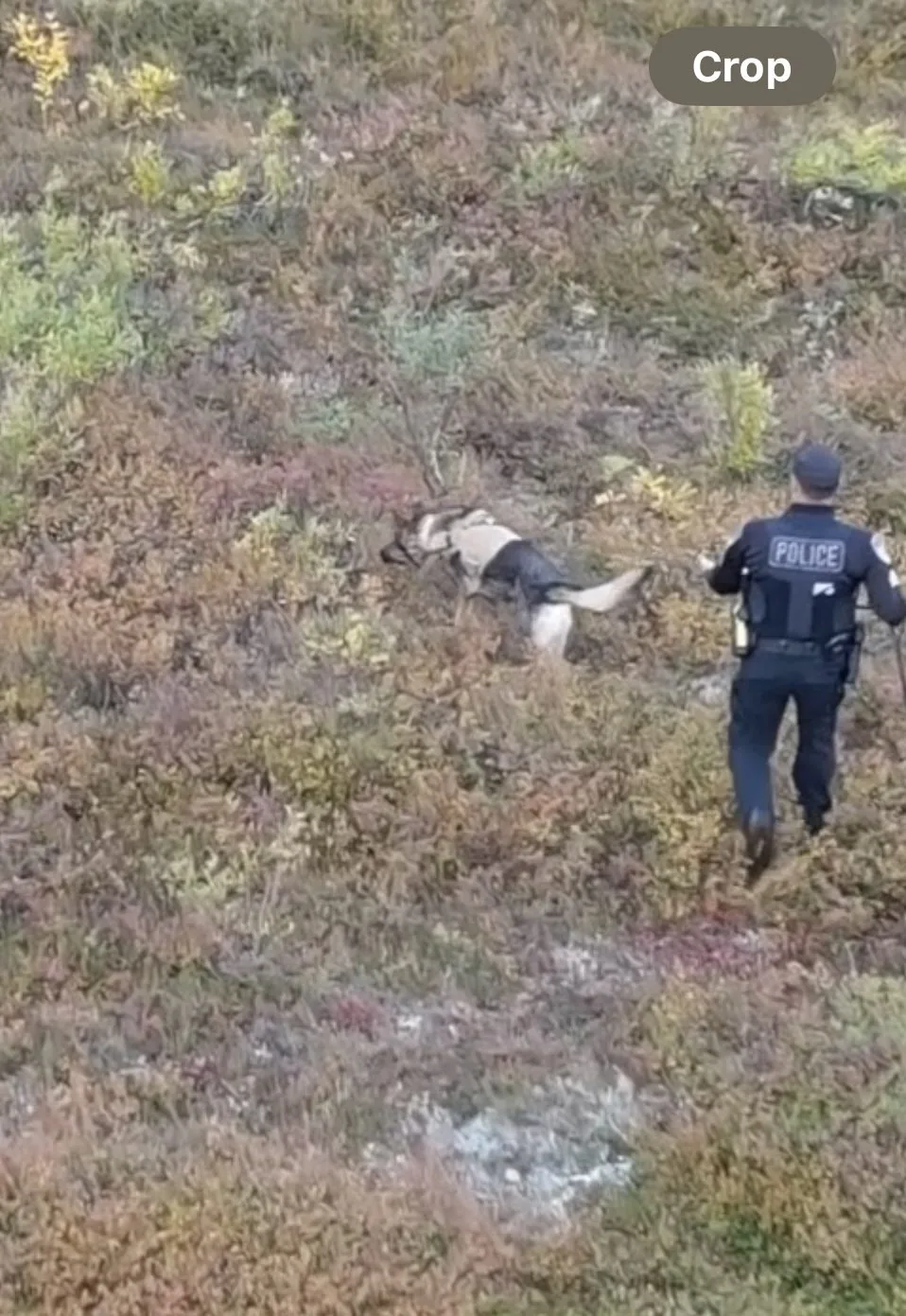
A long track in open country, and how a tracking problem is laid in the first place.

Zeus, long track in Alaska
A long track worked in open country.
Tracking training basics
How a tracking problem is laid and then worked.

More video on the channel

Common questions

Straight answers

What is the difference between tracking and trailing?

In practice the distinction matters less than people think, which is why we teach them together along with air scenting. Tracking leans on the disturbance a person leaves on the ground; trailing leans on the odor that person sheds and which drifts. A dog working a real problem uses whatever is actually available, and training it to use only one is training it to fail when conditions change.

How long does the program take?

The basic program runs about two months with one session a week, and advanced adds roughly another two. Weekly sessions suit working handlers better than a solid block, and tracking needs the days in between — both dog and handler consolidate between sessions rather than during them.

Do we have to do the basic program first?

Yes. A team must complete basic and successfully challenge the end-of-course performance test before entering advanced work. That is a real gate, not a formality. Hard surface and water problems punish a weak foundation rather than exposing it gently.

Can you train a dog we already own?

Usually, after we evaluate it. Tracking asks for a particular kind of persistence, and some dogs have it and some do not. We would rather tell you honestly what we see in your dog than take your money for four months and hand back a team you cannot deploy.

Is the training physically demanding?

Yes, and we would rather say so plainly. Tracking means prolonged walking over uneven ground in heat, cold and rain. Handlers should be fit enough for long searches, and anyone with a health condition that makes strenuous outdoor work risky should speak to their doctor before enrolling.

What does it cost?

Tracking and trailing is quoted rather than list-priced, because the number genuinely depends on the dog, how far you are taking it, and whether you train here or we come to you. What a quote is built from sets out the variables.

Tell us about your dog.

Tracking asks for a particular kind of dog. Send us a short brief and David will tell you honestly whether yours has it.

📞 Call David — (205) 966-8739