For procurement leads and K9 supervisors who can't afford a team that fails in the field — dogs and handlers proven in deployment and documented to a defensible standard.

For law enforcement, K9School delivers finished detection dogs and certified handlers built for deployment and documented to a defensible standard. A reliable K9 is a liability decision before a training one, so every team is trained, blind-tested, and recorded to survive the audit, the hearing, and cross-examination.
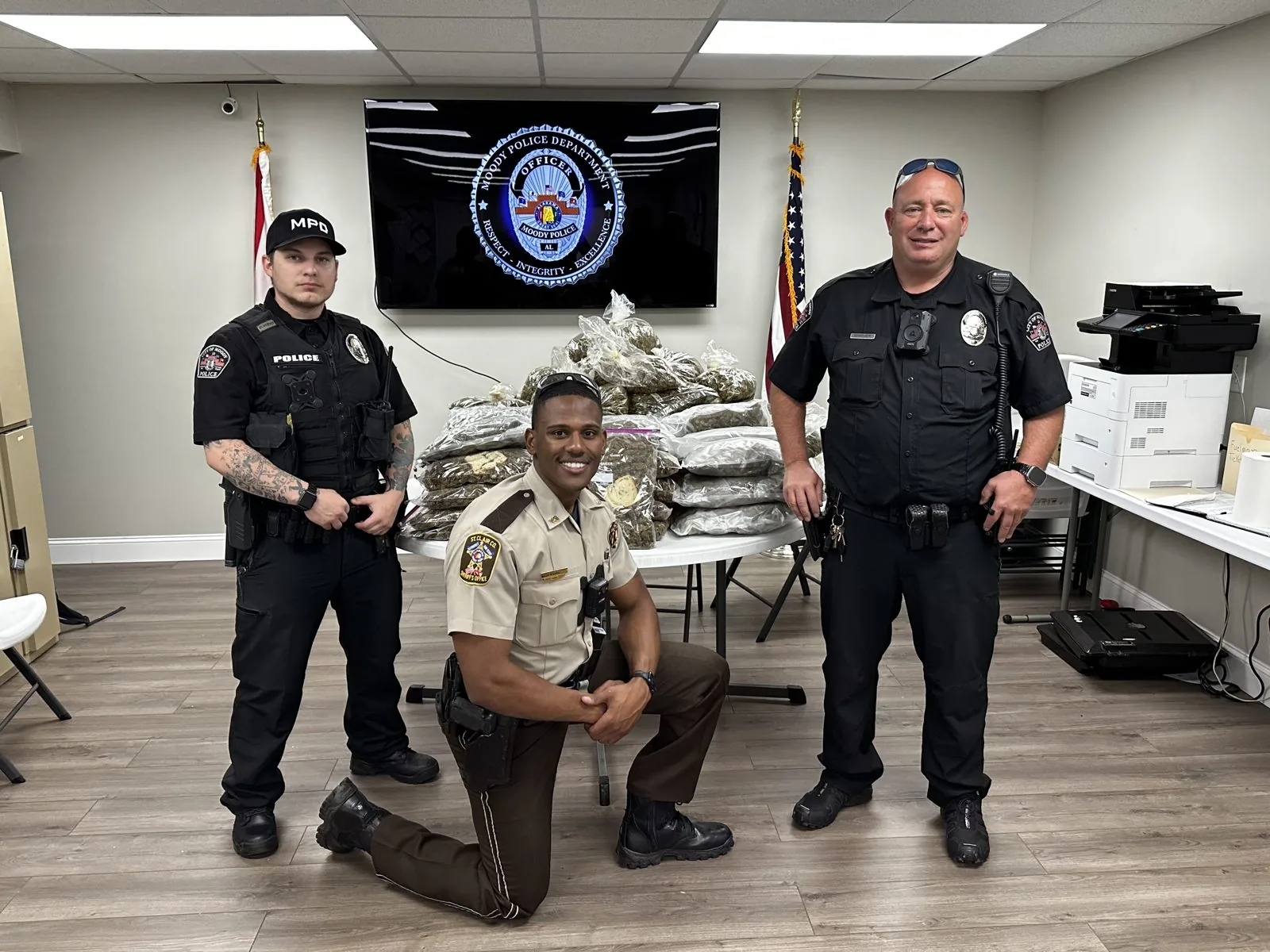
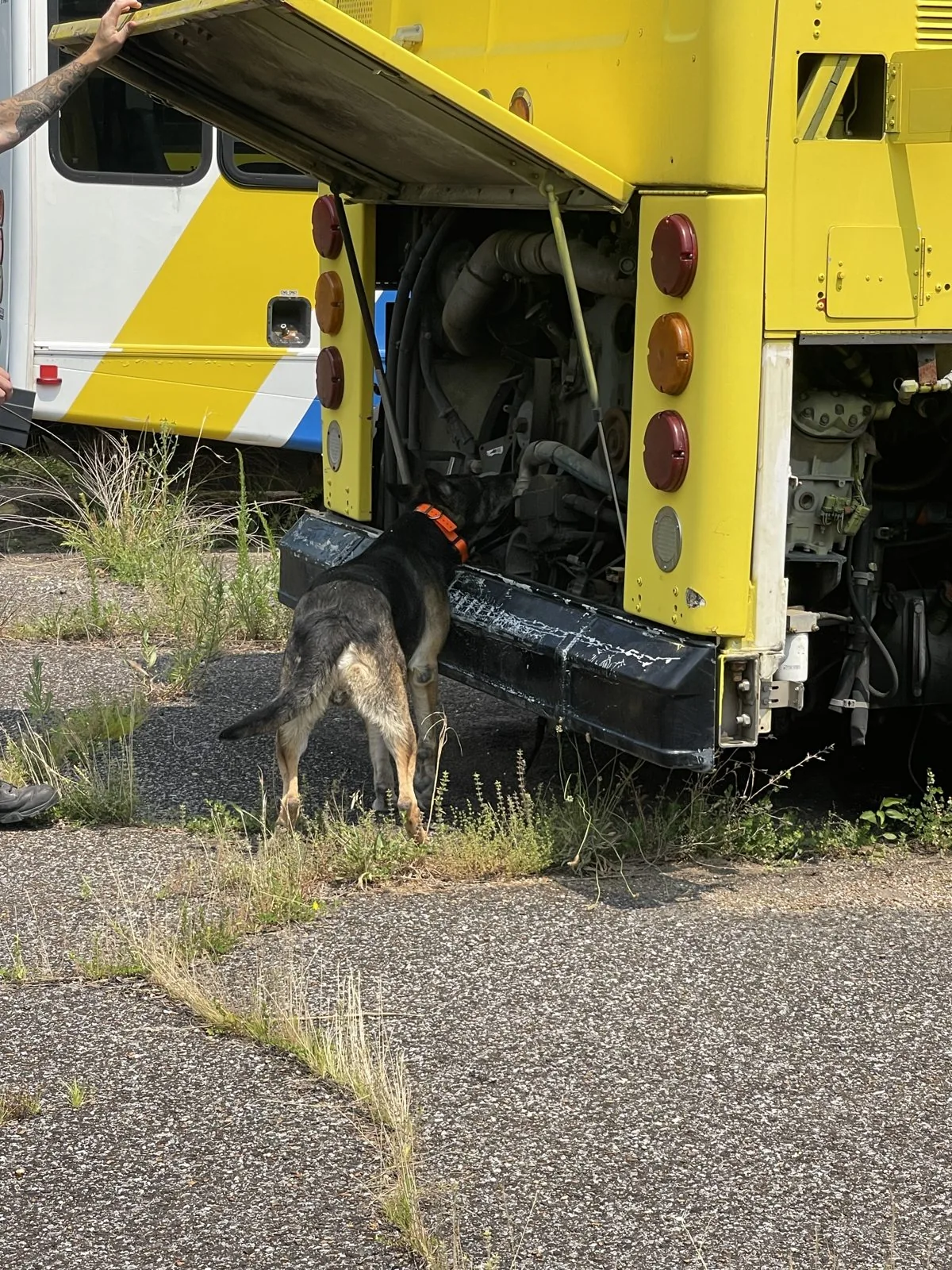
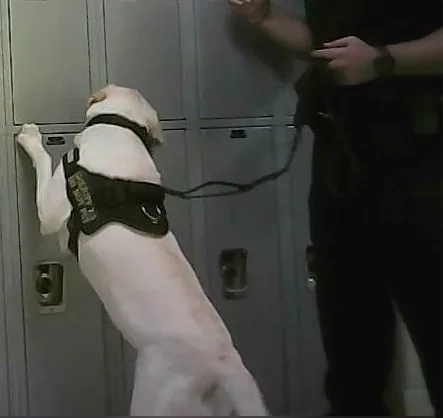
Real outcomes from real deployments.
Teams trained for scrutiny, not just success — behavioral documentation, blind testing, and handlers who can explain what the dog actually did. Led by a retired chief and FBI National Academy graduate who testifies as an expert.
Every team evaluated to the LSOC courtroom-defensible standard — the training records and testing history procurement and courts require.

We deliver detection teams your unit can put to work, with the records to back them.
⬇ Download the 1-page capability brief (PDF)
Hand it up your chain of command — everything a decision-maker needs on one page.
Tell us your mission profile. David responds personally.


When a dog rides in a patrol car, it is not just a tool your unit uses — it is a witness your cases will rest on and a decision your agency will have to defend. Every deployment that dog makes becomes part of a chain that ends, sometimes, in a courtroom, a review board, or a headline. That is the part of the purchase that rarely gets priced. A cheap dog that alerts unreliably, or a handler who cannot explain what the dog actually did, does not save you money. It costs you cases, it costs you credibility, and one bad ruling can taint every deployment that came before it.
We build for that reality first. The question we help you answer is not "can this dog find the aid in a controlled yard?" Almost any dog can do that. The question is: will this team hold up in the environment you actually work, under the scrutiny you will actually face — the suppression hearing, the internal audit, the cross-examination months after everyone has forgotten the details? If a team cannot survive that, it does not matter how flashy it looks on a demo. We would rather you buy the team that survives it.
Reliability is a property of the dog and the handler together, so we do not sell a dog and wish you luck. A deployable team is a finished detection dog matched to the work it will really do — single- or dual-purpose, selected for the environment, the tempo, and the odors your mission demands — paired with a handler certified to run it. The best dog in the country underperforms with an undertrained handler, and a sharp handler is grounded without a sound dog. We deliver both ends of the leash, together, evaluated as a unit.
"Finished" means the dog works the odor problem and reports honestly, including the honest "there is nothing here" that keeps a dog from manufacturing answers under pressure. It means the handler can read the dog through the Five Phases — command, search, detection, change of behavior, response — and can articulate what happened, not just that the dog sat. A handler who can only say "the dog alerted" is a handler who will struggle the first time a defense attorney asks a harder question. We train yours to answer it.
Months after a deployment, the dog cannot testify and memory gets picked apart. What remains is the record. That is why every team we build is documented the way it would be read aloud in court — training logs, maintenance history, and testing results that include the misses, not just the finds. A training record with no failures in it is not proof of a perfect dog; it is proof of a dishonest logbook, and any competent attorney knows it. Honest documentation of a dog's real error rate is not a weakness to hide. It is the foundation of a reliability a court can actually use.
We prove that reliability with blind and double-blind testing, so the record shows the dog works the odor and not the handler's expectation. Our approach is grounded in the case law that governs this work — Harris, Jardines, Caballes, Rodriguez, Place, Edmond — and in training handlers to keep observation and interpretation in separate sentences on the stand. See how we build it on The Method, and how we document it against the LSOC courtroom-defensible standard.
David Latimer is a retired chief of police and FBI National Academy graduate who reviews detector-dog cases and testifies as an expert. That work is always done on the basis of honest evaluation — the goal is truth, never to manufacture a result or "beat" the other side. For an agency, that matters twice over: it means the teams we build are trained by someone who knows exactly how they will be tested in litigation, and it means that when your program or a specific deployment is challenged, you have access to a reviewer who can speak to reliability, documentation, and defensibility in language a court understands. See Consulting for program-level and litigation support.
We place single-purpose detection dogs and dual-purpose dogs across the disciplines agencies actually need — narcotics, explosives, firearms, currency, and electronic-storage detection — selected for the tempo and environment of your unit rather than sold off a one-size shelf. A screening-line dog and an interdiction dog are not the same animal, and matching the dog to the mission is the first place a placement succeeds or fails.
Placement is the start of the relationship, not the end of it. Reliability drifts without maintenance — handlers pick up habits, dogs test boundaries, and a team that was sharp at delivery can quietly erode over a year of real work. We offer maintenance training and post-placement support so performance stays where it belongs and the documentation stays current. When your program has to answer to a court, an inspector, or a chief, that continuous record is the difference between a team you can stand behind and one you are hoping about.
The one-page capability brief puts the essentials in front of a decision-maker: what we deliver, how it's documented, and why it holds up. Hand it up your chain of command, then start the conversation and we'll scope your mission profile directly.
Where we can publish a number, we do. Where the job genuinely varies, we tell you what moves the price instead of hiding behind “contact us.”
Tuition does not include the dog, travel, lodging, certification fees, veterinary expenses, or specialized training materials unless stated. Tracking and trailing, and training a dog you already own, are quoted individually — those depend on the dog.
So you can put a realistic figure in front of whoever signs off before you ever speak to us.
Tell us those five things and you get a written number back, not a sales call.
Blind testing is what separates a defensible record from a hopeful one. Here is one, start to finish.
That's the point. Teams are trained to the LSOC courtroom-defensible standard with documented records and blind testing, so reliability is demonstrable, not just asserted. Our approach is grounded in the governing case law — Harris, Jardines, Caballes, Rodriguez — and in training handlers to separate observation from interpretation on the stand.
Yes. David is a retired chief of police and FBI National Academy graduate who reviews detector-dog cases and testifies as an expert — always on the basis of honest evaluation, never to manufacture a result. See Consulting for litigation support.
Both. You can acquire a finished dog, certify your handler with it, or have us develop your whole program end to end.
We offer maintenance training and support so performance doesn't drift.
Yes.

For procurement leads and K9 supervisors who can't afford a team that fails in the field — dogs and handlers proven in deployment and documented to a defensible standard.