Home / Proof
Proof & Results

Evidence, not adjectives.

The detection world runs on trust earned in deployment. Here's ours — case studies, references, and certification you can verify.

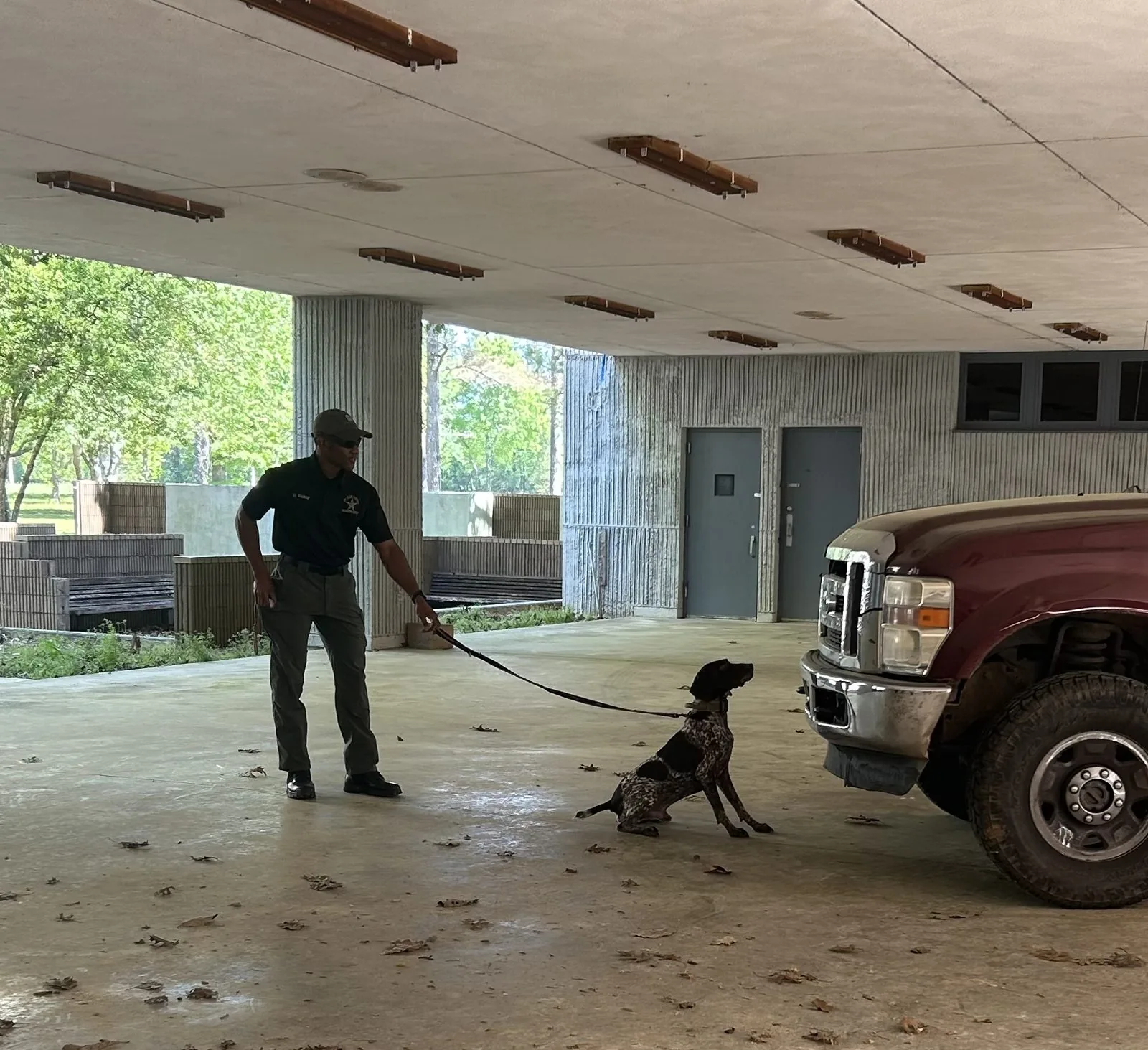
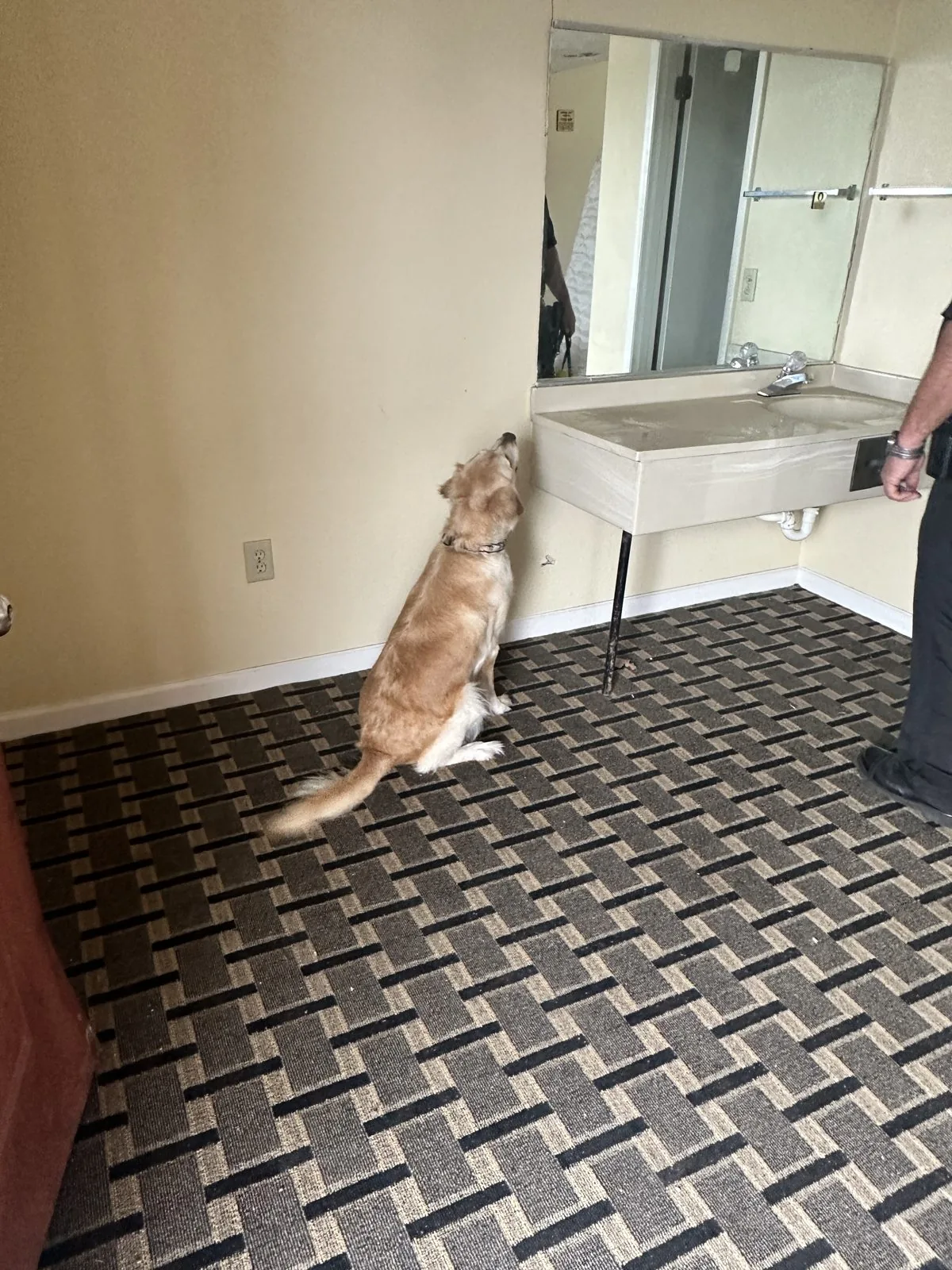
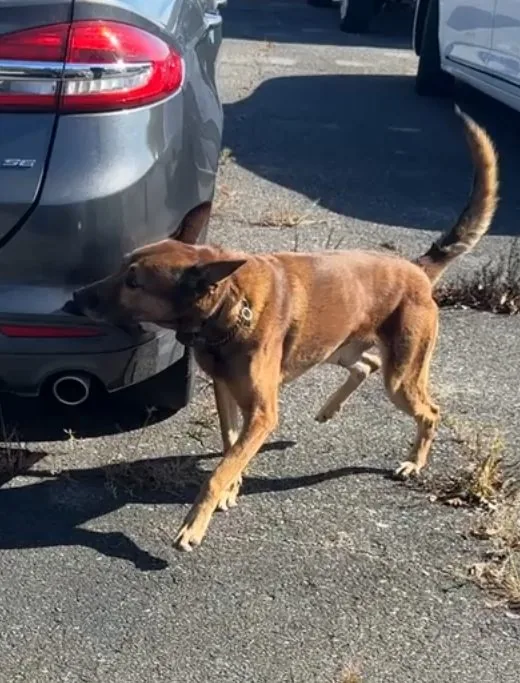
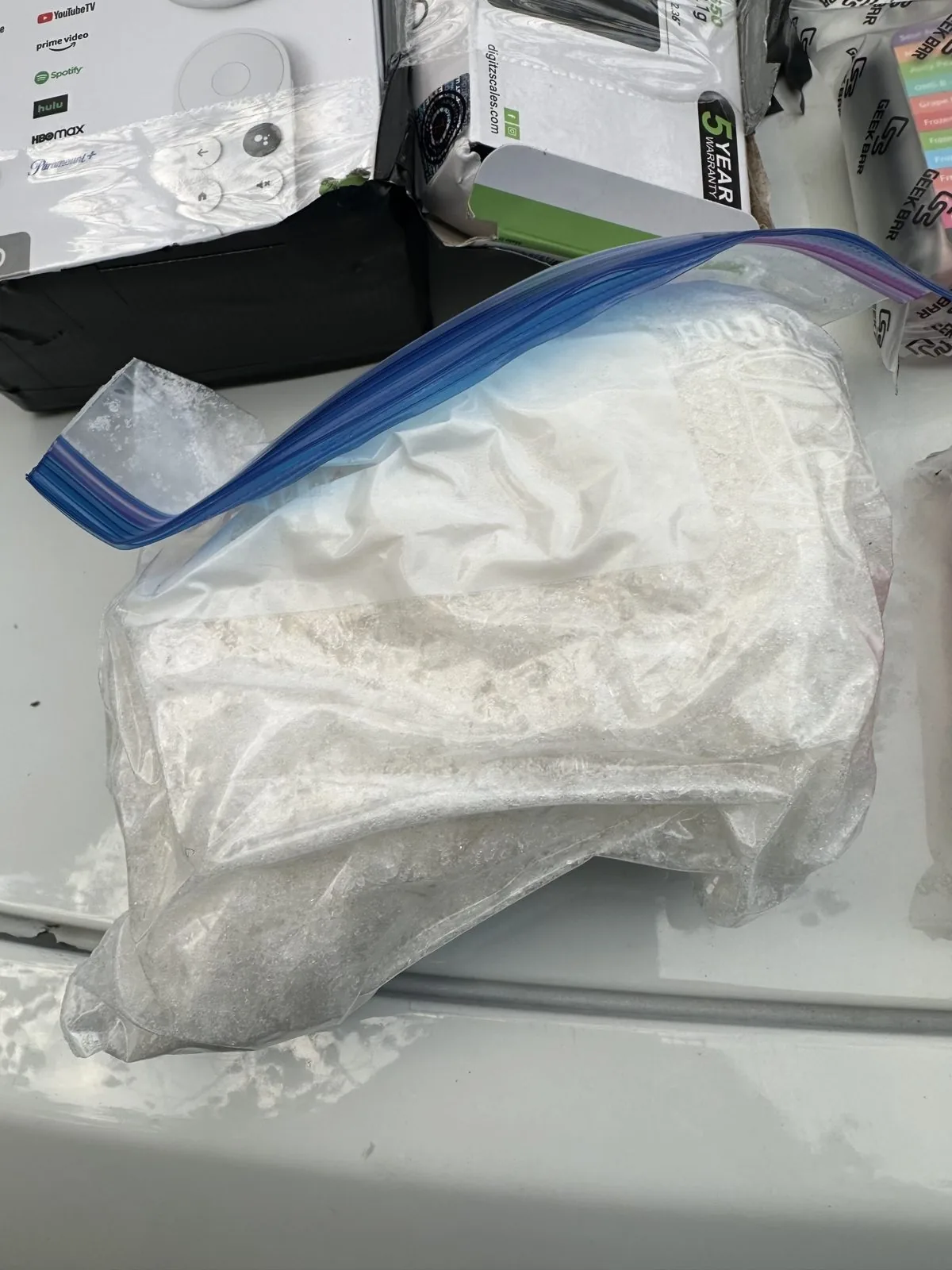
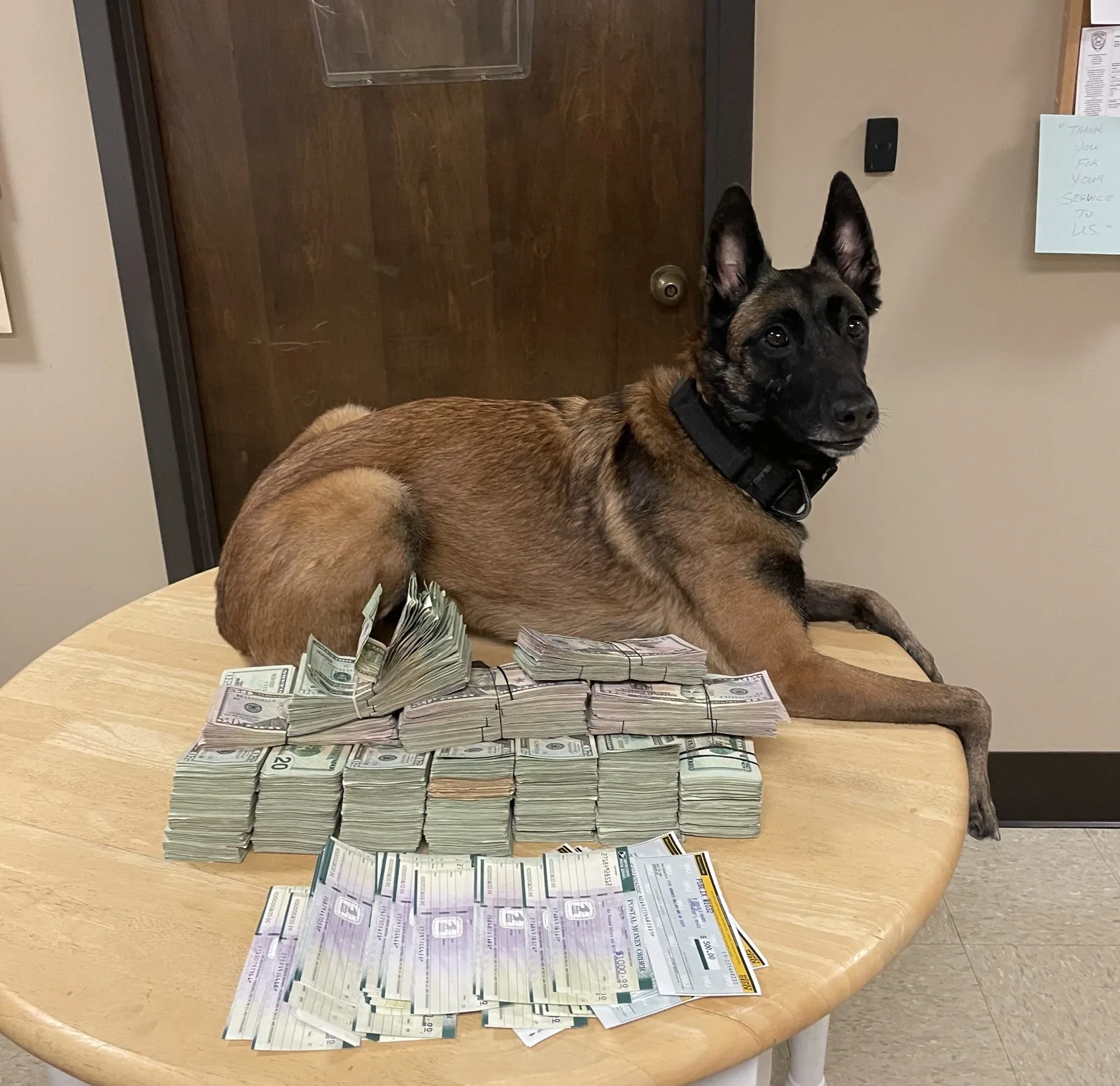
Currency detection — Jinx on a seizure
In short

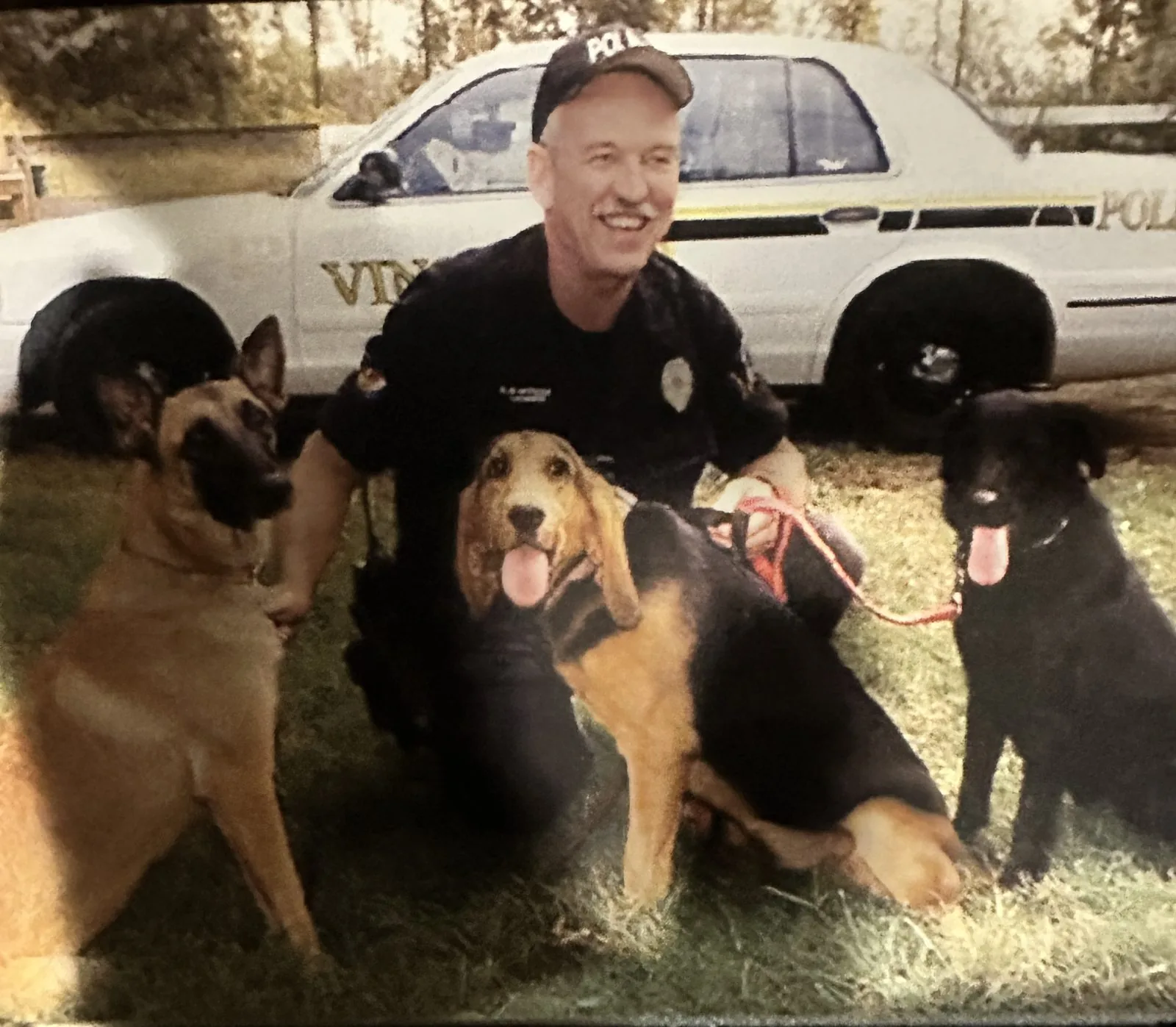
K9School's credibility rests on verifiable proof, not adjectives — case studies, agency references, certification records, and field footage of teams working real problems. Founder David Latimer is a retired police chief, FBI National Academy graduate, detector-dog trainer since 1999, and expert witness on detection-dog reliability.

Case studies

What our teams did in the field.

Told in David's words, including the parts he cannot prove. Where an explanation is a hypothesis, it is labeled as one.

Case study — narcotics

The find another dog had already cleared

David with Tatsa and the team

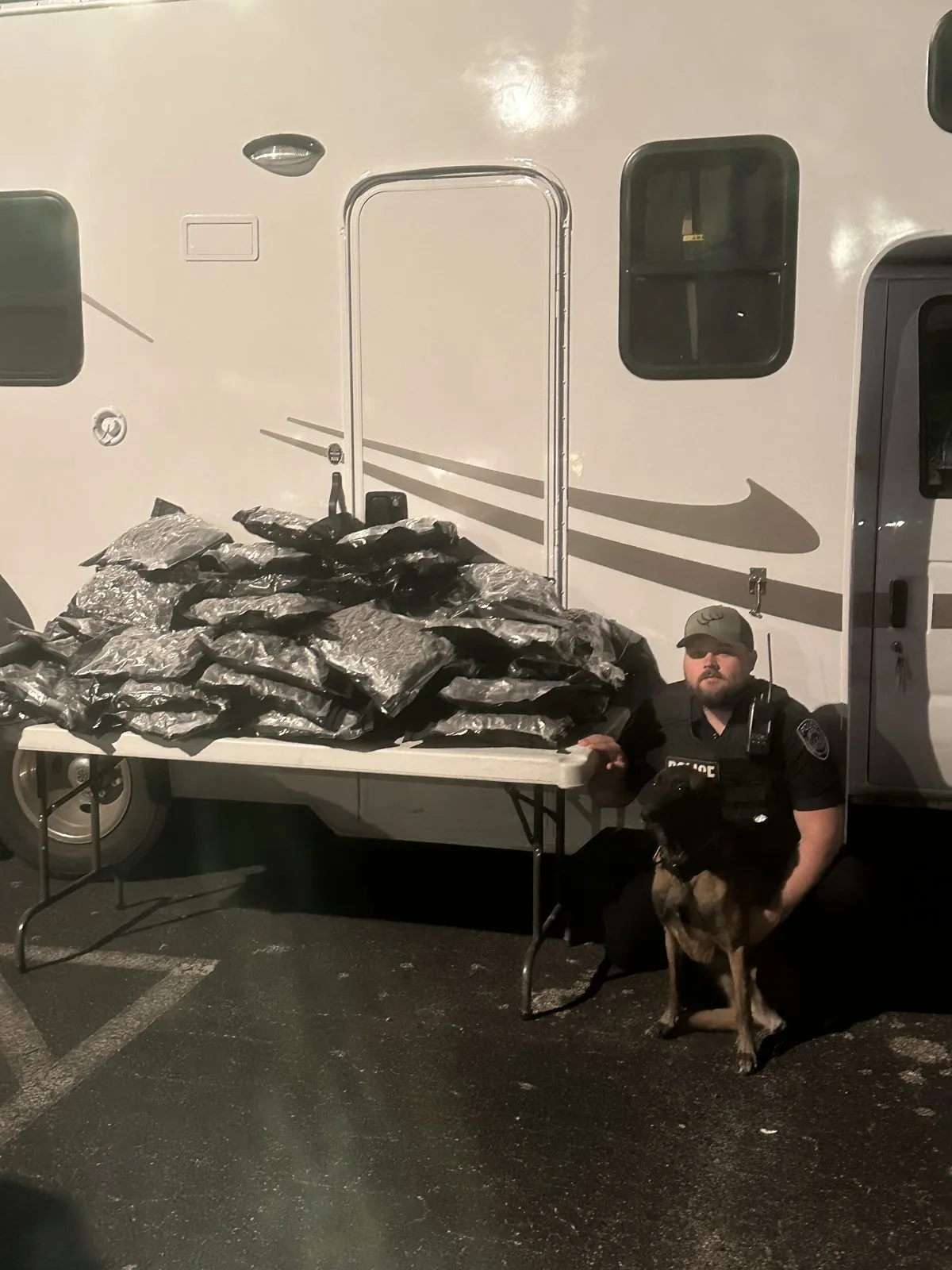
We were called out to work a vehicle for another agency. When we got there five or six patrol cars were already on scene. Must be a big deal, I thought. The officer who made the stop asked me to run Tatsa on the pickup and tell him what we found.

I took her to the grass for a break and we approached from the passenger side. She engaged and started to work. Coming past the driver's door she stopped hard, changed direction back toward it, sniffed for a minute, and sat with her nose pointed at the door. I signaled the alert. The officer opened the door and reached in behind the seat almost immediately: a medicine bottle holding thirty crack rocks, individually wrapped in foil and packaged for distribution. The narcotics and a quantity of cash were seized and the driver was arrested.

Then I was told a K9 team had already worked that truck and cleared it. Had I known that before I came, I probably would not have come.

That one stayed with me. I wanted to know why the other dog did not alert, and I have since learned there are a lot of possible reasons. But one of the most common is handler influence — and almost everyone discusses it in one direction only. Handlers are trained not to cue a dog into a false alert. I think influence can just as easily cause a miss. If a dog has become handler-dependent and is waiting on a cue it is used to getting, it can find the odor, never get the cue, and never give the trained final response.

The handler that day was new, and this is a hypothesis on my part, not something I can prove about that dog. But knowing what I know now it is a reasonable explanation, and it is a large part of why I built training strategies to reduce handler influence. We have to guard against influencing a dog into a false alert. We also have to guard against influencing one into a miss.

What it changed: A miss is harder to catch than a false alert. Nobody audits the vehicle you drove away from.
DogTatsa
DisciplineNarcotics detection
OutcomeThirty crack rocks behind the driver's seat; narcotics and cash seized, driver arrested
Case study — explosives

The box Lucy cleared, and the squad blew up anyway

After Boomer passed away I started training my wife's Border Collie, Lucy, on explosives. She took to it almost immediately, and before long we were training regularly with the bomb squad from a larger department. Those men were professionals who believed training should be as realistic as possible. Their commander built scenarios that forced the team to think like investigators rather than technicians — evaluate the evidence, make a decision, solve the problem under conditions that looked like a real call.

One exercise has stayed with me ever since. A cardboard box had been left at the entrance to a shopping center before opening, reported by patrol after a bomb threat. The center was closed, so the squad had the whole property to work with. They approached the box, elected not to X-ray it, and decided to deploy Lucy to find out whether explosive odor was present.

I gave her the command to search. The box was the only object in the area, so of course it drew her. She worked it thoroughly, every side. I watched for the behavior that always came before her trained final response when she was in odor. It never came. No increase in interest. No change in breathing. No increased focus. No source commitment. She satisfied her curiosity, left the box, and carried on searching the area around it. She had run the problem and reached a conclusion. It just was not the conclusion the humans expected.

After a few minutes I called her back and reported that Lucy found no indication of explosive odor. For reasons I have never fully understood, the decision was made to proceed as though a device was inside anyway. A water cannon was brought up, the stand-off distance calculated, the operators careful and methodical and entirely professional. Then they fired. The box came apart and a life-sized plastic baby doll bounced across the parking lot.

Nobody said anything for a moment. The exercise had never been about destroying a suspicious package. It was about making a sound decision on the available evidence. By that standard the team failed. Lucy did not. She investigated, evaluated, reached a conclusion and moved on. She never hesitated, never guessed, and never changed her answer because experienced people believed something different.

That is what Credo Vestri Canis means to me. Trust your dog.

What it changed: A trained dog reporting no odor is information, not the absence of information. If you only believe the dog when it says yes, you do not actually have a detection capability — you have a device that confirms what you already thought.
DogLucy
DisciplineExplosives detection
OutcomeNo explosive odor present. The dog was right; the decision went the other way.
Case study — the failure that changed the method

The bullet Boomer could not find

Boomer was my first explosives dog and he taught me more than any dog since. One thing he did looked genuinely impressive: he could find a single round of ammunition, fast. I ran that demo many times. Pop the magazine out of my Glock, take out a round, toss it into grass or somewhere it was out of sight, send Boomer, and within a few minutes he would be sitting and pointing his nose at it. It never failed.

Then one day another officer and I were at a gathering with a lot of other police there. I had Boomer with me for socialisation. My colleague wanted to show people what the dog could do, so he popped a round out of his Glock and threw it into a grassy area. I sent Boomer and he engaged hard, sniffing, working. I had no reason to think he would not be sitting on it within the minute.

The minutes went by. It became obvious he was not going to find it. That was one of the most humbling things that has happened to me in this work, and it happened in front of a crowd of cops.

I thought about it for a long time afterwards, mostly because I never wanted it to happen again. I knew dogs could find ammunition, so something was wrong, and I suspected the something was me. It was. Eventually it dawned on me what had actually been going on. Boomer was not finding a bullet. He was finding an object that carried the odor of my hands. Every round I had ever thrown had been handled by me first.

That taught me three things I have never let go of. Human odor is enormously strong to a dog. A dog can tell one person's odor from another's. And a training set-up can quietly teach a dog something completely different from what you believe you are teaching it, while producing results that look like success every single time.

What it changed: For months I thought I had a dog that could find ammunition. What I actually had was a dog that could find me. That is what stimulus control means, and it is why we test for it rather than assume it.
DogBoomer
DisciplineExplosives detection
OutcomeA public failure that exposed what the dog had actually been trained on
Case study — accelerant detection

Seven fires, one pattern

Accelerant detection team on a fire scene

A series of arson fires was being set at multi-family apartment complexes. We were called in by another agency to work them — the mayor and chief I worked for always encouraged helping other departments, on the understanding that the favour comes back, and it did on many occasions.

The arsonist always set the fires on the back decks. He had started with dumpster fires and graduated, so to speak, to structures. From the first scene we worked through the last, Midnight found the residue of charcoal lighter fluid. Sometimes it was a pour that ran up the steps and onto the deck. On others it was in the soil under the deck, where the fluid had run between the boards and dripped through to the ground below. She found hot samples at every one of the fires we worked.

What mattered was not any single alert. It was that her alerts kept landing in the same two places — on the deck near the back door, and at the top of the steps — scene after scene. The lab confirmed the samples. That consistency is what turned a run of separate fires into a pattern, and the pattern was a component of tying seven of them together.

What it changed: One alert is an observation. The same alert in the same place across seven scenes, with lab confirmation behind it, is a signature. Documenting where the dog alerted mattered as much as documenting that she did.
DogMidnight
DisciplineAccelerant detection
OutcomeAlerts in the same two locations at every scene, lab-confirmed, tying seven fires together
Case study — commercial bed bug detection

The seats nobody had to treat

Bed bug detection team working a commercial site

Commercial bed bug work is a cost problem before it is a pest problem. Treating an entire auditorium means chemical, labour, and closed doors on a room that only earns money when people are sitting in it. Treating the seats that actually have bugs in them means a fraction of all three.

Our teams worked theaters seat by seat and isolated the infested ones. Individual seats were treated rather than the whole theater, which saved the operators thousands in treatment costs and kept rooms in service. The venues were eventually cleared, and after that only periodic inspection was needed to keep them that way.

That is the case for a dog in commercial detection, and it is an economic one as much as a technical one. A dog that can tell you which twelve seats out of four hundred are a problem is not a novelty. It is the difference between a targeted treatment and shutting the room.

What it changed: In commercial work the dog's value is precision, not spectacle. Finding bugs is the easy part; telling a client exactly where they are not is what saves the money.
DogBed bug detection teams
DisciplineBed bug detection
OutcomeIndividual seats isolated and treated instead of whole auditoriums; venues cleared and held
From the field

The work, as it happens.

Detection is behavior you can read — the search before the sit. These are our teams working real problems: alerts, finds, and handlers built to hold up where it counts.

Photos from LSOC training and deployments.

A referral, unedited

Four dogs, twenty years, and a termite dog that remembered.

Steve Dodge on training with David Latimer5:04 — Recorded at home on a phone and sent to us whole. Five minutes, no edit.

Steve Dodge ran a pest control company for twenty years and bought four detection dogs from David across that span — two termite, then two bed bug. He recorded this at home on his phone and sent it over as a file. No crew, no edit; what is on this page is what arrived.

He gives three reasons, and they are not the three a trainer would pick for himself. How the dog is chosen before any training starts. How deep the odor imprint goes. And the handover — that David “doesn’t drop the dog off and the handler, here it is, go work your dog.” Then, about two minutes in, he tells a story about a dog called Marlo.

“It was one year that Marlo had not worked … A friend came to visit me, and he had some termites in his car. I said, bring it to my house and hide it. And Marlo and I went outside. He hid it, we came in, and Marlo searched and found those termites.”— Steve Dodge, retired pest control operator

We are publishing it whole for the same reason the case studies keep their hedges in: a testimonial you can cut is a testimonial you can shape. Everything around that quote is in the transcript below, including the part where he offers to take the call himself — “but remember, if you call me and talk to me, I love to talk dog.”

Read the transcript

Good evening, this is Steve Dodge. I've retired now — had a pest control company for 20 years, and me and my partners, we had the luxury of using K9s in our pest control service. We had termite K9s, and we also had bed bug K9s. All my K9s came from David Latimer in Alabama, and there are three real strong reasons why I chose his methodology and the way that he performed his certification and certifying and developing an odor recognition K9.

First thing in picking and choosing an odor recognition K9 — the important thing is they would have to go out and look for that dog, and there's characteristics of the dog that's necessary. Does it have a food drive? Does it have a toy drive? Does it have a drive that wants to continue to work and loves to work? It's a passion that the dog has, and he doesn't have ADD where he doesn't want to work and he stops in the middle of everything. And David was excellent in selecting a dog for us.

Our first dog was a termite dog, and then we received a second termite dog because we'd been doing it for 20 years. And then we moved off and moved into the bed bug arena, and we got two bed bug dogs, and all of the efficiency of them was so strong. David was very good at each of the selection of those K9s and choosing the right one for the target odor that we wanted, and that would perform and work at a level of efficiency that would give us the highest output. And that was very good. His selection process is very important.

Number two phase that Dave would do is the training of the dog, and his way to train the dog and get the dog to really respond and have a drive. He had a unique way of training. He was strong, and he could understand the dog and getting the dog to perform at a high level. And we call that an imprint that the dog receives. It's a deep imprint for that odor recognition.

I'll have to tell you a quick story. I retired, as I mentioned. My termite dog, Marlo, came with me when I retired, and it was one year that Marlo had not worked — and that means he wasn't in any type of odor for termites. Well, I had the opportunity: a friend came to visit me, and he had a termite dog, but he had some termites in his car. And I asked him, you got some live termites? He said, yeah, in a vial. I said, bring it to my house and hide it. And Marlo and I went outside. He hid it, we came in, and Marlo searched and found those termites — one year, and not been in odor or working at all. He was retired, like myself.

That imprint that David puts in a dog is so strong that Marlo knew what his task was when I gave him the command to search. Obviously I was very proud and excited about that, but that's one of the benefits of David Latimer as a master trainer. He's able to really build in that real strong imprint, and that dog's willingness to really work strong.

I guess the third point that's so strong with David is the fact that he doesn't drop the dog off and the handler, here it is, go work your dog. He works with the handler to make the transition from him training it and getting into odor to how the handler should handle the dog and his method of training, so he could continue that same pattern. And it's easier for the dog to continue on without any interruptions.

That's a very, very vital important — to make the final transition of the whole phase is to make sure that the handler knows exactly how to work the dog the way David trained. But David takes the extra time to make sure that that transition will work, where the dog will go off of the trainer and over to the handler and perform at a highest level.

Those are the three things that I've worked with him over the last 20 years, and had four dogs with him. I'm so thrilled to have that ability. We did real well in our business because of the quality of dogs we had, and the customer really saw the value and the trust went up. Everything just worked so well.

And it was a pleasure to be able to take time to share this. And feel free — I'm available to talk to anyone. But remember, if you call me and talk to me, I love to talk dog. We might be on for a while. But it was a pleasure to do this. Thank you so much, everybody, and good luck in your business as well. Thank you.

Machine transcribed and checked by hand. Captions are on the player.
In their words

What handlers said on camera.

These are not quotes we typed up. Each one is lifted from a handler's own filmed testimonial, and every card links to the clip so you can watch the man say it and judge for yourself. They were recorded during earlier academy and seminar years, when David was the master trainer.

“This week has been an amazing week for me. I've learned high-pitched praise, I've learned alerts, I've learned “show me,” I've learned leash control. I plan on taking it back to Maryland with me and being one of the best dog handlers possible.”— Devin Reynolds, Maryland
Watch the clip ↓
“I thought I was actually good with dogs. Now that I've worked with their dogs, and with the dogs I'm going to be working with for the rest of my life, I can honestly say I'm going to be okay.”— Steven Karaduzovic, Long Island, New York
Watch the clip ↓
“A very good education — comprehensive, step by step. Treated really nicely, treated like family. I'd recommend this to anyone.”— Nathaniel Levin, Long Island, New York
Watch the clip ↓
“These conferences are a real hands-on experience — a lot of leash time, a lot of evaluation with peers and the master trainer, David Latimer.”— Steve Yerger, Security Centurion Canine
Watch the clip ↓
Watch

Handlers, in their own words.

Filmed during earlier seminars and academies. Nothing here is scripted.

Steven Karaduzovic
Handler testimonial.
Steve Yerger, explosives and bed bug detection
Seminar testimonial.
Nathaniel Levin, one week of K9 training
Academy testimonial.
Devin Reynolds
Handler testimonial.
Rick Chapel, Tennessee
Handler testimonial.
Jonas Wilkey
Handler testimonial.
Mike Hanna
Handler testimonial.

More video on the channel

Want references for your specific use case?

Tell us the mission and we'll connect you with the most relevant proof.

Request references
📞 Call David — (205) 966-8739