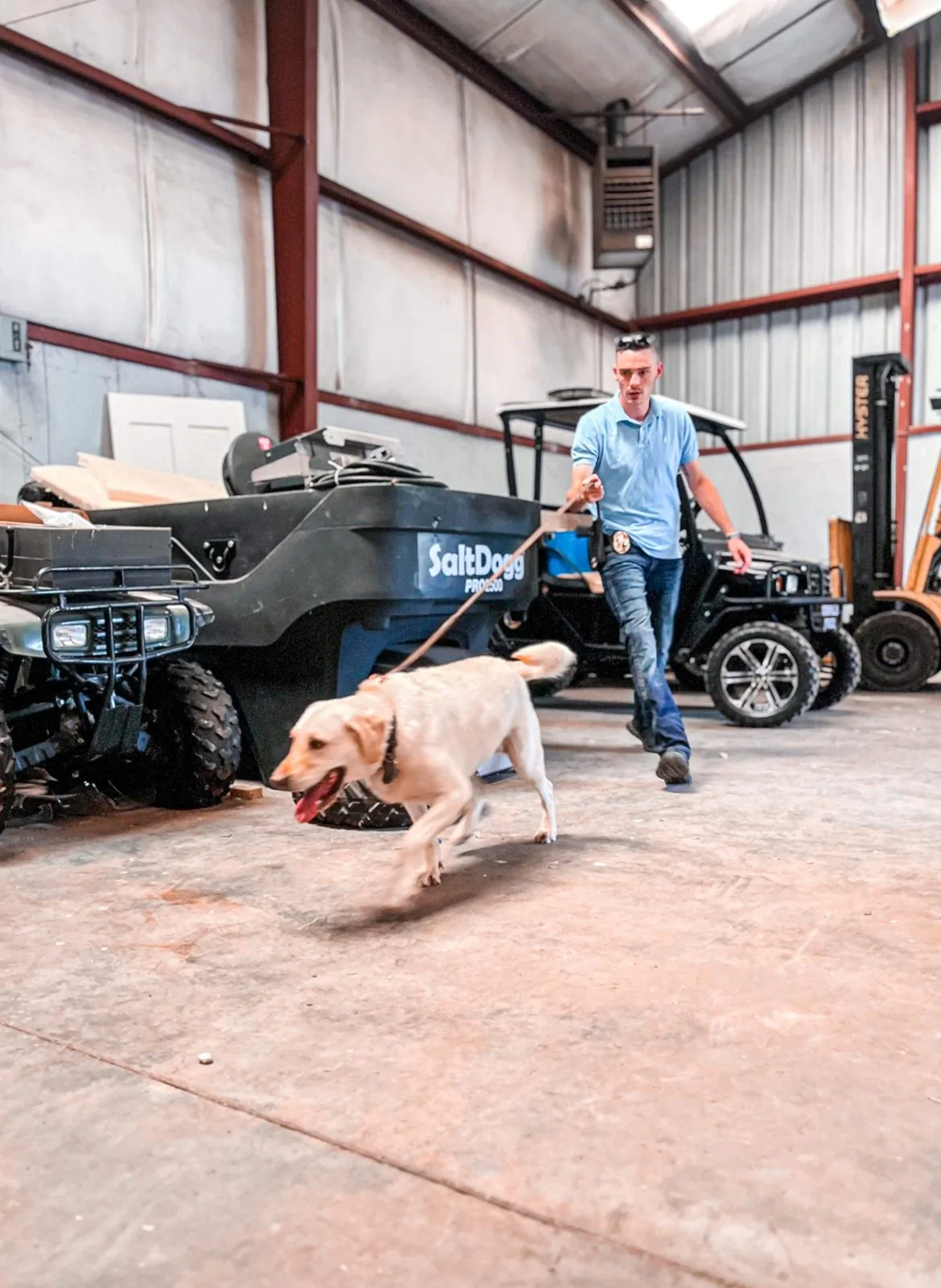
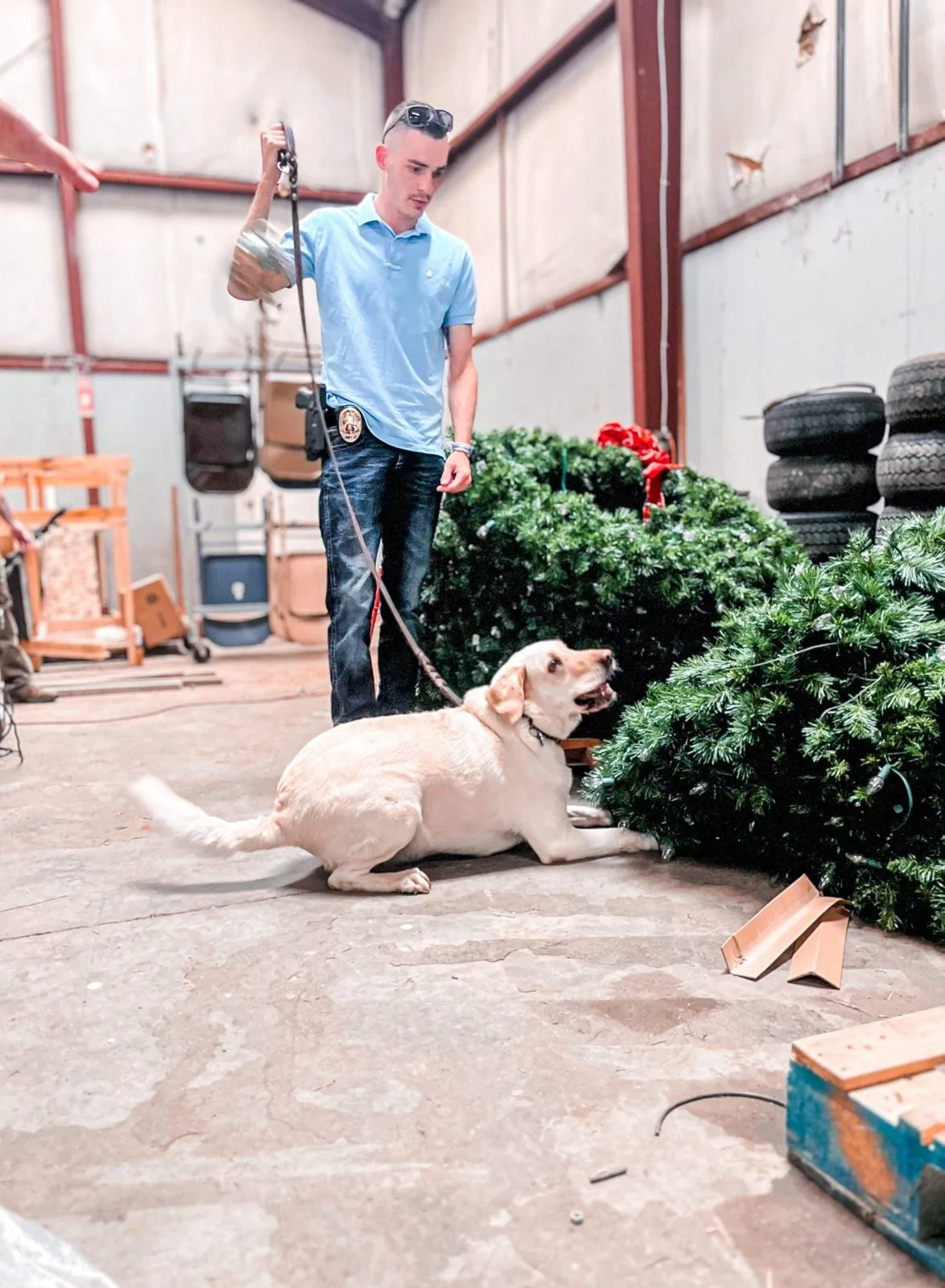
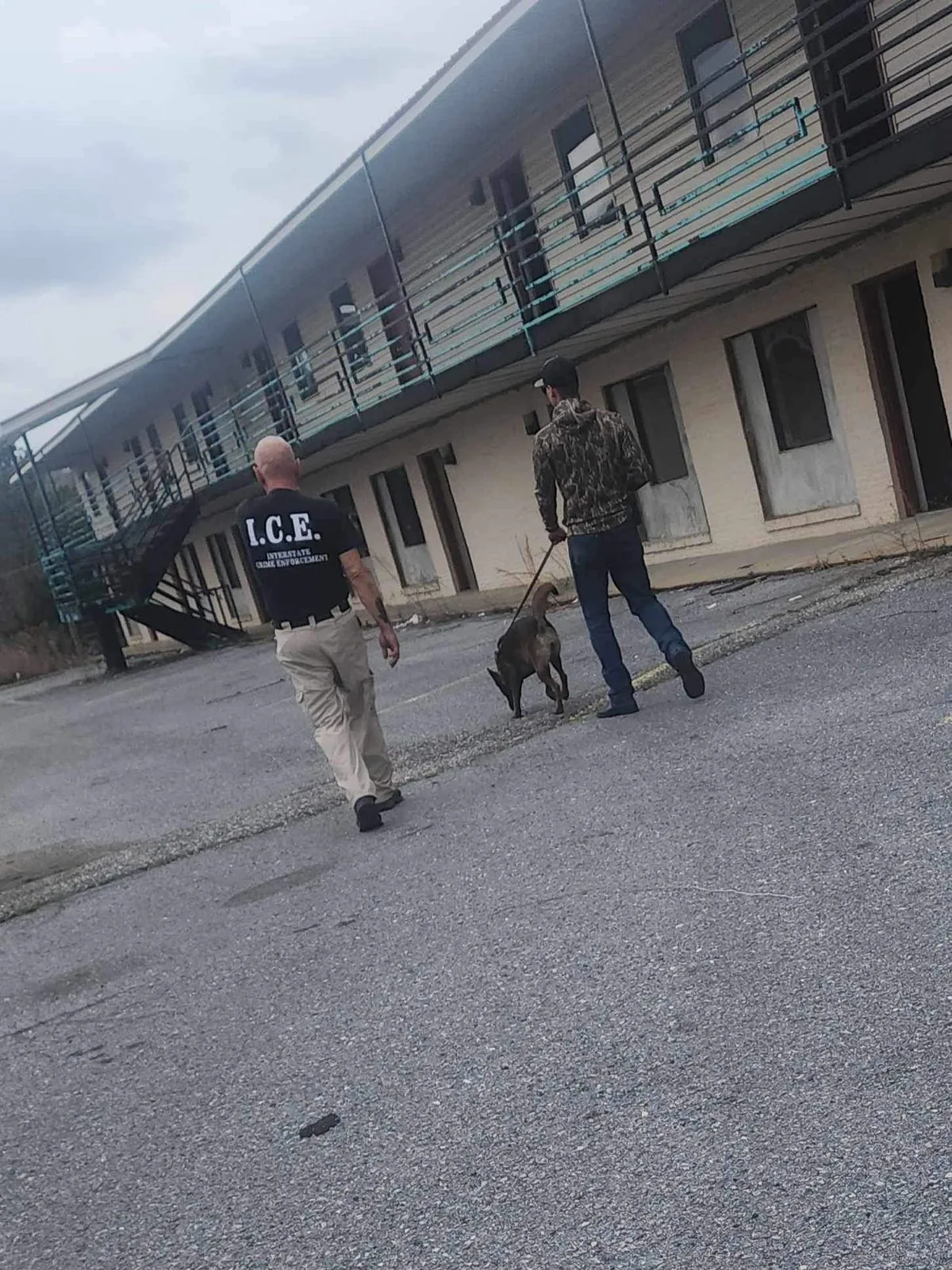
The most powerful force acting on a detector dog often isn't the odor. It's the person holding the leash. Handler influence isn't misconduct — it's usually unconscious — but if you don't understand it, you can't build a dog a court will trust.
Reading leash influence
In short
The Invisible Leash is unconscious handler influence — the physical, visual, verbal, and emotional cues a dog reads from the person on the leash, as the Clever Hans case and Dr. Lisa Lit's research show. Honest teams don't deny it; they manage it and audit for it with blind and double-blind testing.
The Clever Hans lesson
A century ago, a horse called Clever Hans appeared to do arithmetic — until researchers showed he was reading tiny, unconscious cues from the people around him. Detector dogs are at least as sensitive. When a handler expects an alert, the dog can find one, whether or not odor is present.
What the research shows
The clearest demonstration is Lit, Schweitzer and Oberbauer (2011), published in Animal Cognition. Eighteen certified law-enforcement narcotics and explosives teams searched rooms that contained no target odor at all. Handlers were told scent might be present, and in some conditions that paper markers showed where. Across 164 searches the teams produced 225 incorrect alerts, and those alerts clustered at the locations the handlers believed held odor. The handlers' beliefs moved the results more than anything the dogs were reacting to.
Be precise about what that proves, because overstating it is its own trap. It does not mean handlers cue dogs into false alerts every time, and later work has found the size of the effect depends heavily on how strongly the handler believes and how the test is run. Some of the effect is also the handler reading ambiguity as an alert because they expected one — influence running dog-to-handler rather than handler-to-dog. Both directions are the same problem for a court: the record shows an alert that odor did not cause. This isn't an attack on handlers. It's a description of how sensitive these teams are, and why the fix is structural rather than a matter of trying harder.
Influence does not only cause false alerts. It causes misses.
Almost everyone discusses handler influence in one direction: the handler expects odor, the dog reads the expectation, and an alert appears where there is nothing. That is the failure the research documents and the one handlers are trained to avoid. It is only half the problem.
A dog can also be influenced into missing. If a dog has become dependent on its handler — used to a particular cue, a pause, a change of posture before it commits — then a handler who does not produce that cue can leave the dog holding information it never reports. The dog finds the odor and gives you nothing, because the thing it was really waiting on never arrived.
This matters more than it sounds, because of the asymmetry in how the two errors get caught. A false alert is visible: the search happens, nothing is found, everyone in the parking lot knows. A miss is invisible. The vehicle is cleared and driven away and nobody ever learns what was behind the seat. Programs audit the error they can see and stay blind to the one they cannot, which means the miss rate of a handler-dependent team can stay unmeasured for years.
David has written up a deployment that turned on exactly this — a vehicle another team had already worked, and what Tatsa did with it. Read the case study.
Handler and dog as one system
Four channels of influence
Physical — leash tension, body position, slowing at a spot.
Visual — a glance, a lean, a change in posture.
Verbal — tone and timing of encouragement.
Emotional — the handler's own anticipation traveling down the leash.
Why the dog isn't cheating
It's worth being precise about what is happening, because the instinct is to blame the dog or the handler, and both are wrong. The dog is doing exactly what it evolved and was trained to do: gather every scrap of available information and act on it. The handler is part of the dog's environment. If the handler's body, voice, and attention are quietly broadcasting where the answer “should” be, the dog is being a good detective when it factors that in. The failure isn't the dog reading you — it's a training and testing process that let your knowledge into the search in the first place.
Two things David has watched happen
The clearest way to understand handler dependence is to watch it from the outside, which David has done for most of his career. Both of these are his own observations, and neither is an accusation. Nobody in either story was being deceptive. They were handling the way they had been taught to handle, it appeared to work, and so nobody questioned it.
The first was a demonstration. A man had smashed a single termite into a soda-bottle lid and set it in a line with other lids. His dog picked that lid out every time, no matter how often he moved it in the line-up. Most of the people watching were impressed. What David noticed was that the dog looked back at the handler before every choice — and that the handler always knew which lid was the right one. Nobody in the crowd seemed to register that second fact. Clever Hans would have been proud of both of them.
The second was a dog working a fire scene. The handler brought it out of the car and it locked immediately onto his face, waiting for instruction. When the search started he bent at the waist and pointed at the area he wanted sniffed, and he stayed bent over the whole time, pointing at the floor, moving ahead of the dog with the leash held tight and his other hand indicating the next spot. The dog would saunter over slowly, eyes mostly on the handler, mouth open and not really sniffing until it reached the exact place indicated. Often it did not close its mouth and sniff even then. It stared at the handler, waiting for a signal, and sat slowly and tentatively, still staring. The handler would say show me several times and the dog would start bobbing its head up and down. All that head bobbing told you very little about where the odor actually was.
Both dogs looked like they were working. Neither was doing detection in any sense that would survive a hard question. This is not a rare way to handle a dog, and in David's judgement it is a large part of why accelerant dogs came close to being discarded as a tool for fire investigators some years ago.
Training the human end of the leash
What influence looks like in the real world
Handler influence is rarely dramatic. It's the half-second of hesitation as you approach the vehicle you searched last week. It's planting your feet a beat longer at the trunk where the aid “usually” is. It's the small exhale of relief when the dog reaches the right car, or the extra bit of lead you unconsciously give near a spot you suspect. None of it feels like communication to the handler. All of it is audible to the dog. That is why good handlers are trained to present every search the same way — the same pace, the same body, the same neutrality — whether they know the answer or not.
How honest teams respond
You don't eliminate influence by going passive — you manage it and audit for it. Blind training (the handler doesn't know the hide locations) and double-blind testing (no one present does) reveal whether the dog is working odor or reading the handler. “Let the dog stop you. You don't stop the dog.”
Why this is a courtroom issue, not just a training one
Handler influence is not an academic curiosity — it is one of the first things a competent defense attorney will raise, precisely because the research is public and the logic is easy for a jury to follow. If your program cannot show that its dogs perform under conditions where the handler did not know the answer, then every alert is open to the argument that the dog was reading the handler. Blind and double-blind records are the answer to that argument. A team that has lived inside that kind of testing can look a court in the eye and say the dog works the odor; a team that has only ever trained where the handler knew the hide is hoping, and hope does not survive cross-examination. This is why reducing and auditing influence is not a nicety in our program — it is the foundation of a reliability you can defend.
Frequently asked
Is handler influence the same as cheating?
No. It's almost always unconscious. The problem isn't intent — it's that unmanaged influence undermines reliability. That's why we train to reduce it and test to expose it.
How do you test for it?
Primarily through blind and double-blind training and evaluation, which remove the handler's knowledge of where odor is — so the dog's work stands on its own.
Watch
Handler influence, shown.
Five short clips. In each one you can watch the dog answer something the handler did not mean to say.
Handling, reading a false alert The response happens. The behavior before it tells you why.Handling, good loose leash What the leash should be doing, and what it should not.Handling, too much bending Handler posture working as an unintended cue.Handling, do not stop in one place too long Pausing at a spot tells the dog something you did not mean to say.Handling, get in and get out Presenting an area without contaminating it.