Home / About
About

Operator. Trainer. Expert witness.

K9School is the working home of Latimer School of Operational K9s — David Latimer's operational detection practice in Lincoln, Alabama, built on a career spent in the field and in the courtroom.

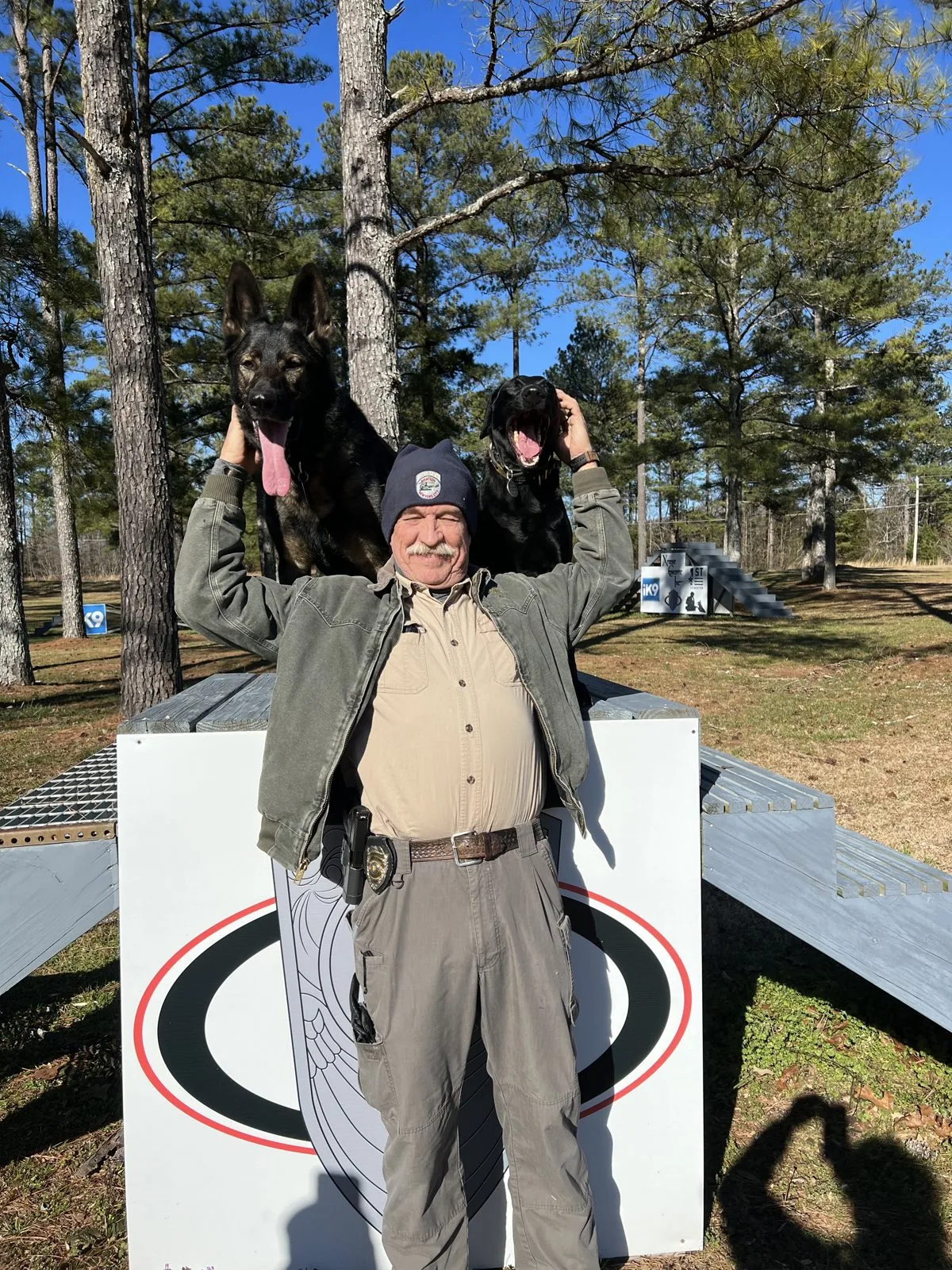
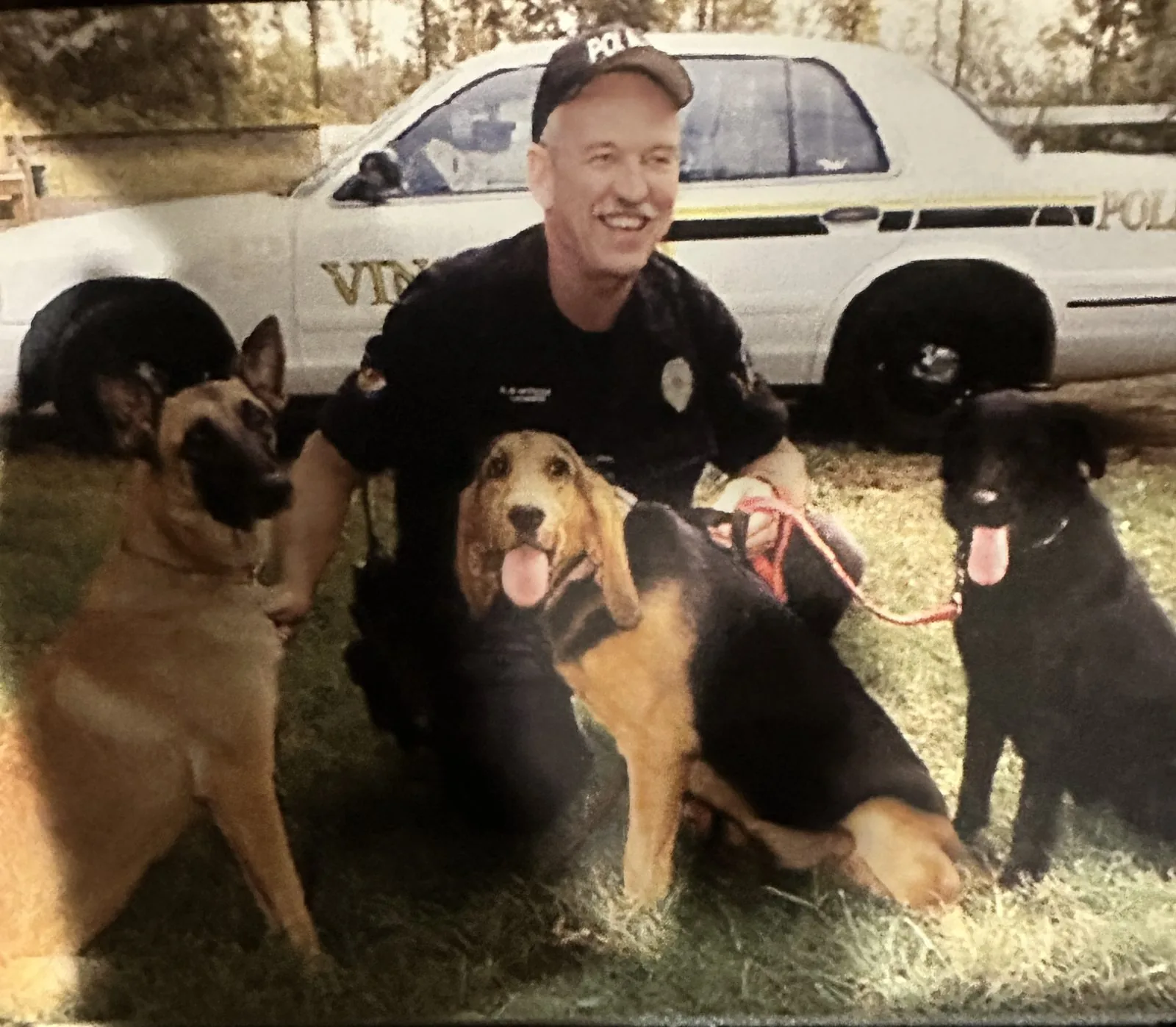
David Latimer with his dogs
In short

David Latimer is the operator behind K9School — a retired chief of police, FBI National Academy graduate, and detector-dog trainer since 1999 across arson, narcotics, explosives, cadaver, tracking, and pest detection. He trains, certifies, consults, and testifies as an expert witness, and authored the LSOC method.

David Latimer

A lifetime around working dogs.

David Latimer's work with dogs began long before his first detection deployment — it began as a boy, watching his father work a liver-spotted pointer named Sport with nothing but his voice and a quiet kind of respect. That was positive reinforcement before it had a name, and compound behavior before anyone called it that. The lesson stuck: the dog was always communicating; the job was to listen.

After the military — where he served as an HVAC technician and then a small-arms marksmanship instructor — a chance friendship with a forensic engineer pulled David into the world of fire and explosion investigation. He trained his first accelerant-detection dog in 1999, worked hundreds of fire scenes, and helped put arsonists in prison. From there came narcotics, explosives, cadaver, and tracking dogs, and pest-detection dogs beginning around 2002.

He attended the police academy in 2003 and served as a law enforcement officer for the rest of his career, promoted to Chief of Police in 2007 before retiring from full-time law enforcement in 2015. Along the way he graduated from the FBI National Academy in Quantico — the highlight of his LE career. Today he trains, certifies, consults, and testifies, and has written extensively on detector-dog behavior and reliability.

  • FBI National Academy graduate — Quantico, VA, Session 247, 2011.
  • Retired Chief of Police and Director of Public Safety — roughly eight years as a police executive; law enforcement officer since 2003.
  • Training detector dogs since 1999 — arson/accelerant, narcotics, explosives, cadaver, tracking, and pest detection.
  • Co-founder of the World Detector Dog Organization, where he helped advance double-blind testing and more objective methods of evaluating detector-dog teams.
  • Has trained and evaluated hundreds of detector-dog teams across the United States, Canada, and Mexico.
  • Author and instructor on detector-dog behavior, reliability, and courtroom defensibility.
See the method he teaches
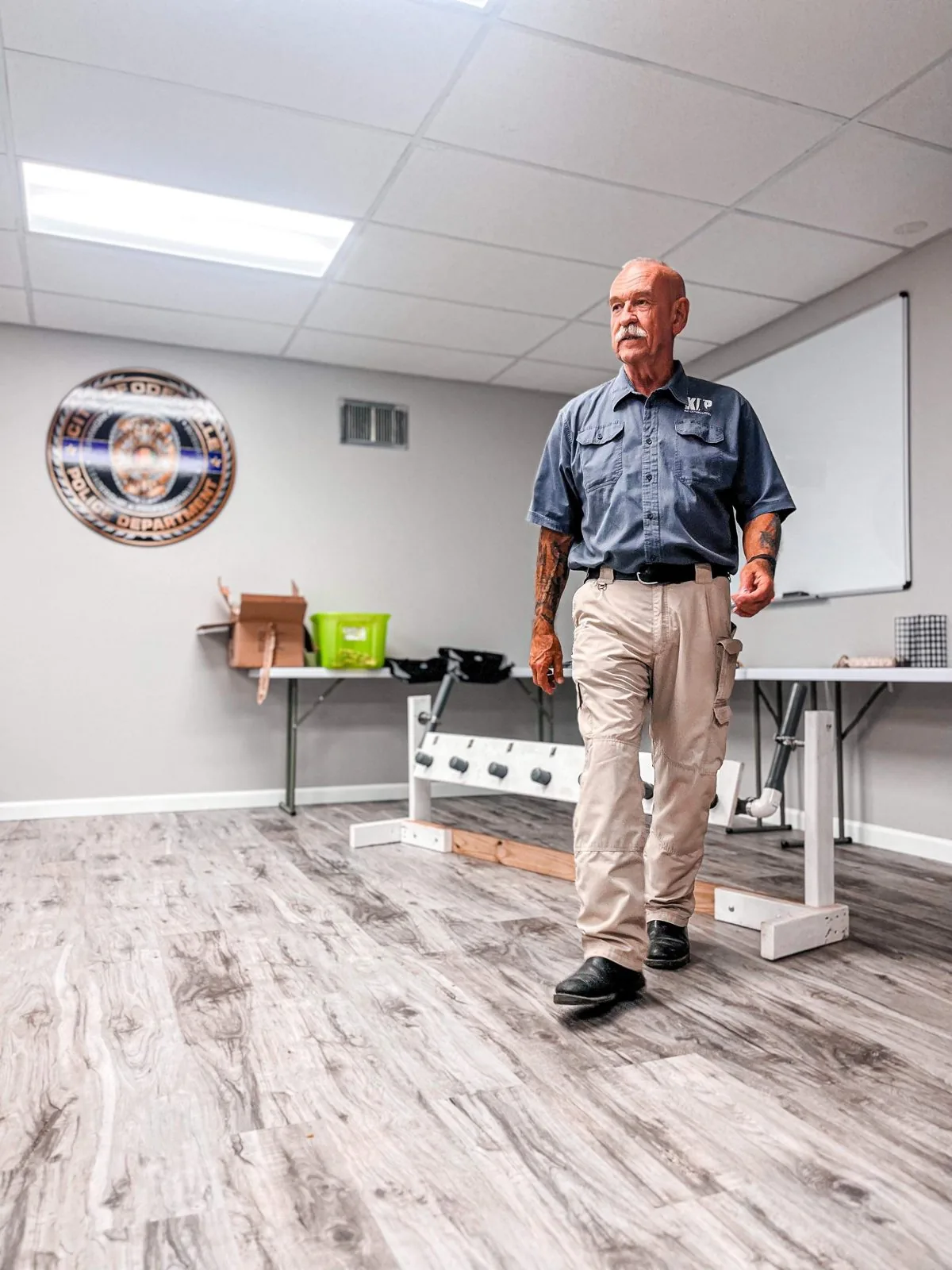
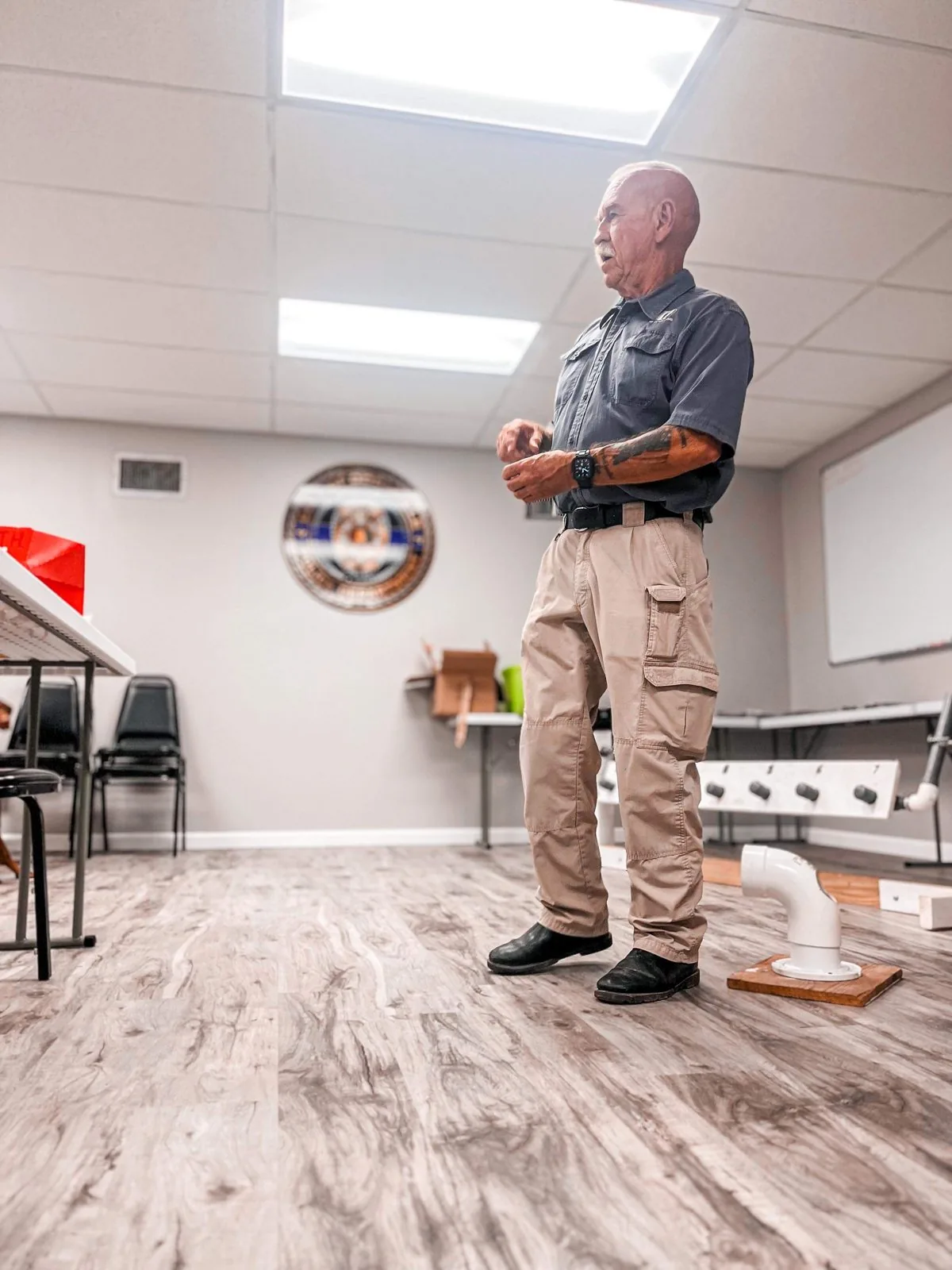
David Latimer instructing in the training room

David Latimer — training the human end of the leash.

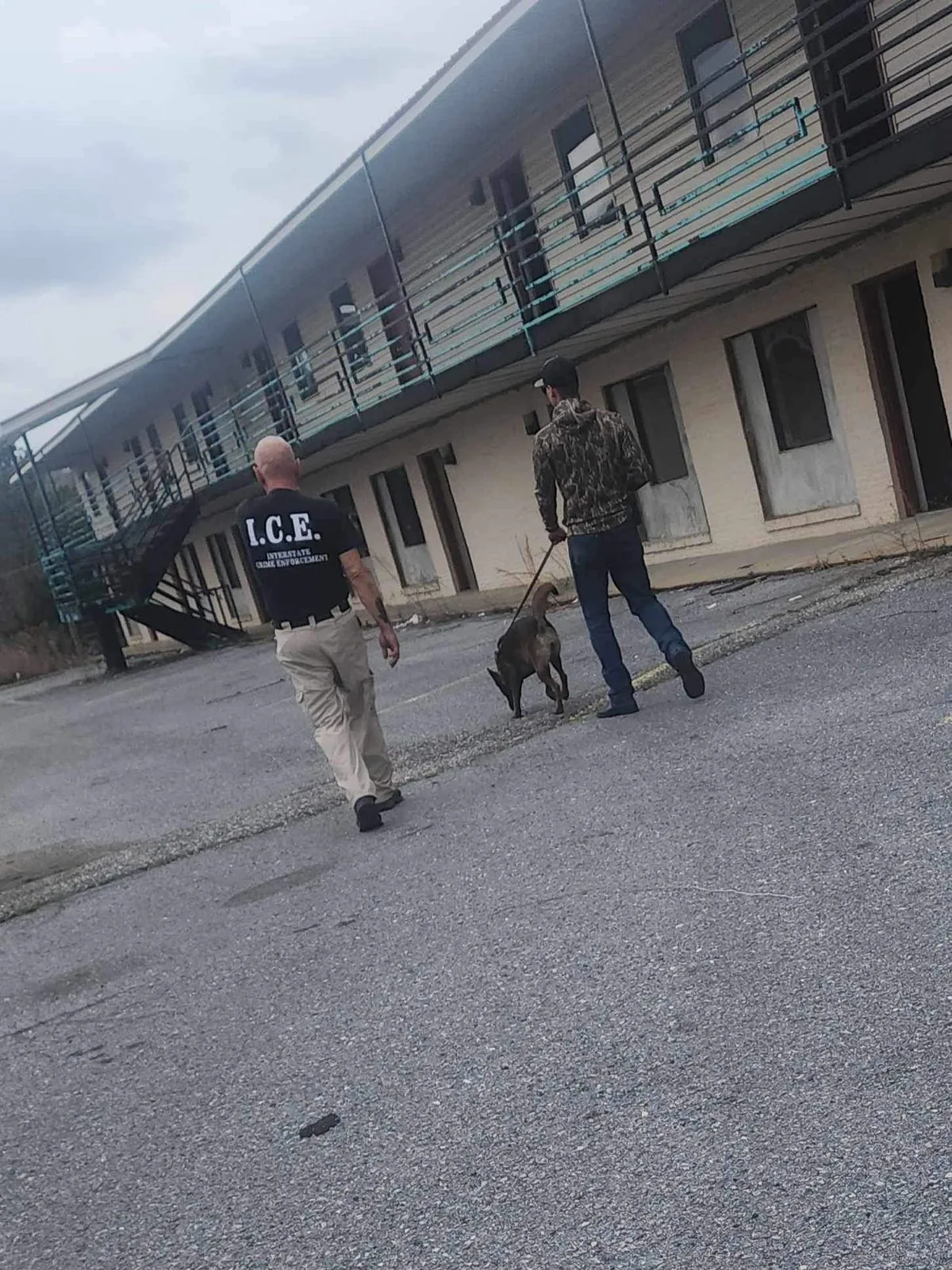
In the field with the dogs
Working alongside a handler
Watch

An earlier program.

FSI introduction
An earlier program David built and ran.

More video on the channel

It started with Sport

The dog was always talking. The job was to listen.

Before there was a method, or a badge, or a witness stand, there was a boy watching his father work a liver-spotted pointer named Sport. No electronics, no harsh corrections — just a voice, a read on the dog, and a quiet respect for what the animal already knew how to do. David's father was practicing positive reinforcement before the phrase was fashionable and building compound behavior before anyone had a term for it, and the boy absorbed the lesson that would organize the rest of his life: the dog is always communicating; the handler's only real job is to understand it. Everything on this site is, in one way or another, a footnote to Sport.

Trained for the field

Where the phrase came from.

Sport was one dog. What came after him was years of watching quail dogs work huge pieces of ground with almost no input from anybody. As we walked, they would wind scent, raise their heads, sample the air, and head toward the origin. Often they would shift into ground tracking, because quail move on the ground until they are flushed — the dog reading the problem and changing method to suit it. When they found the birds they locked up in a motionless point, nose aimed straight at the covey, and held it until we walked past, flushed the birds, and shot a few.

They did all of that without repeated commands to seek, without a handler pointing or bending over them, without constant direction. The dogs were focused on the odor of quail, and nothing else. David's father was teaching compound behavior and a trained final response long before those were terms anybody used.

Two things came out of those years. The first is that David never had to be persuaded that a dog's nose was real. He had watched too many of them work all day, finding birds until they were exhausted. In his words: not once do I recall walking up to a pointed bird dog and not finding quail where the dog pointed. He is quick to add the necessary qualification — false alerts are a fact of life in detection work, and the honest response to that is to train to minimize them rather than to make excuses for them. But having seen what a dog is capable of when it is genuinely working odor, he was never going to accept less than that as normal.

The second is the phrase itself. It came from watching his father start puppies in the yard. A young dog can look perfect in the yard and come apart the first time it is turned loose on a real hunt. It was not that they could not find birds — most of them could. The question was whether they could apply logic to a hunt, use wind scenting and tracking, solve the odor problem, and then point and hold until the hunter flushed the birds. All of those pieces had to arrive at once. You can control a dog in a backyard and make the performance look pretty. Out in the field, where the dog has to take over, is a different story.

That is where it comes from: trained for the field, not just the yard.
Fire taught him to prove it

Where "reliability you can defend" stopped being a slogan.

David's path into detection didn't run through a kennel — it ran through fire. After the military, where he served first as an HVAC technician and then as a small-arms marksmanship instructor, a friendship with a forensic engineer pulled him into the world of fire and explosion investigation. In 1999 he trained his first accelerant-detection dog, and the work that followed shaped everything about how he thinks. He worked hundreds of fire scenes and helped put arsonists in prison.

Arson work is unforgiving in a specific way: the dog's indication is only the beginning. What the dog found has to survive a laboratory, a report, and a defense attorney, months or years later. There is no room for a handler who can only say "the dog alerted." From the start, David had to be able to describe exactly what the dog did, document it honestly, and defend it under cross-examination. That is not a marketing posture he adopted later; it is the environment his career was forged in. Courtroom-defensibility is simply the water he learned to swim in.

One nose, many disciplines

From accelerants to narcotics, explosives, cadaver, tracking — and pests.

Odor is odor, and the principles that make a dog honest do not change with the target. From accelerant detection, David moved into narcotics, explosives, cadaver, and tracking work, and around 2002 into pest-detection dogs — the specialty that would eventually anchor the legacy Kip K9 brand. Each discipline has its own environment and stakes, but each is trained on the same foundation: teach the dog to discriminate, to commit to source, and to tell the truth about what is and isn't there. A trainer who understands behavior rather than memorizing a single odor picture can move across all of it, and that breadth is exactly what lets David build programs and place dogs across such different kinds of work today.

The badge and the bench

A career spent accountable for the outcome.

David attended the police academy in 2003 and spent the rest of his career in law enforcement, promoted to Chief of Police in 2007 before retiring from full-time service in 2015. Along the way he graduated from the FBI National Academy at Quantico — the highlight of his law-enforcement career, and a credential that reflects the level at which he was operating. The chief's chair matters to how he teaches: he did not just handle dogs, he was ultimately answerable for a program — for its liability, its documentation, and its performance when someone came looking for a weakness. He has stood where the procurement lead and the K9 supervisor stand, which is why the work here is built backward from the scrutiny an agency actually faces rather than forward from a demo.

Why he writes and testifies

An author on behavior — and an expert witness on reliability.

Today David trains, certifies, consults, and testifies, and he has written extensively on detector-dog behavior and reliability — a manuscript distilled from decades of doing the work. He testifies as an expert witness on detector-dog reliability, always on the basis of honest evaluation; the goal is the truth of what a dog can and cannot tell you, never manufacturing a result or beating the other side. Writing and testifying are two expressions of the same conviction: this discipline improves when it is explained plainly and held to honest scrutiny, and it suffers when it hides behind bravado. He would rather teach a handler to describe a search precisely than watch another team rest a case on "the dog alerted."

The dog behind the name

Kip.

One of the finest detector dogs David ever worked was an accelerant-detection dog named Kip — the namesake of the original Kip K9 brand. What set Kip apart wasn't drive or flash. It was honesty.

Kip worked because he wanted to solve the odor problem. If target odor was there, he found it. If it wasn't, he refused to manufacture an answer just because someone expected one. More than once, people questioned his decisions — and more than once, Kip was right and the assumptions were wrong. That honesty became one of David's greatest teachers, and it's the standard every dog here is built toward.

"Kip worked because he wanted to solve the odor problem. He did not seem compelled to manufacture an answer simply because someone expected one."— David Latimer
One operation, several roots

K9School, Latimer School of Operational K9s, and Kip K9

K9School.net is now the single home for the work formerly carried under Kip K9 and the Latimer School of Operational K9s (LSOC). Same operator, same standard, one place to find it — with the legacy detection specialties (narcotics, arson, termite, bed bug, allergen) organized under our detection-dog service lines.

Teaching handlers to the standard
From the book

The method, in David's own words.

David Latimer's forthcoming book distills decades of detector-dog work into a single idea: behavior is evidence. The same principles that shape every dog and handler here are set out in full — from the search before the sit to surviving cross-examination.

Coming soon

Let's talk about what you need to deploy.

Get in touch
📞 Call David — (205) 966-8739